
The shell of
your extension
Blockwork off the footings, cavity wall up to the wall plate, lintels, trays and the facing skin — the part that decides whether everything after it goes on straight.
Footings to plateCavity workLintels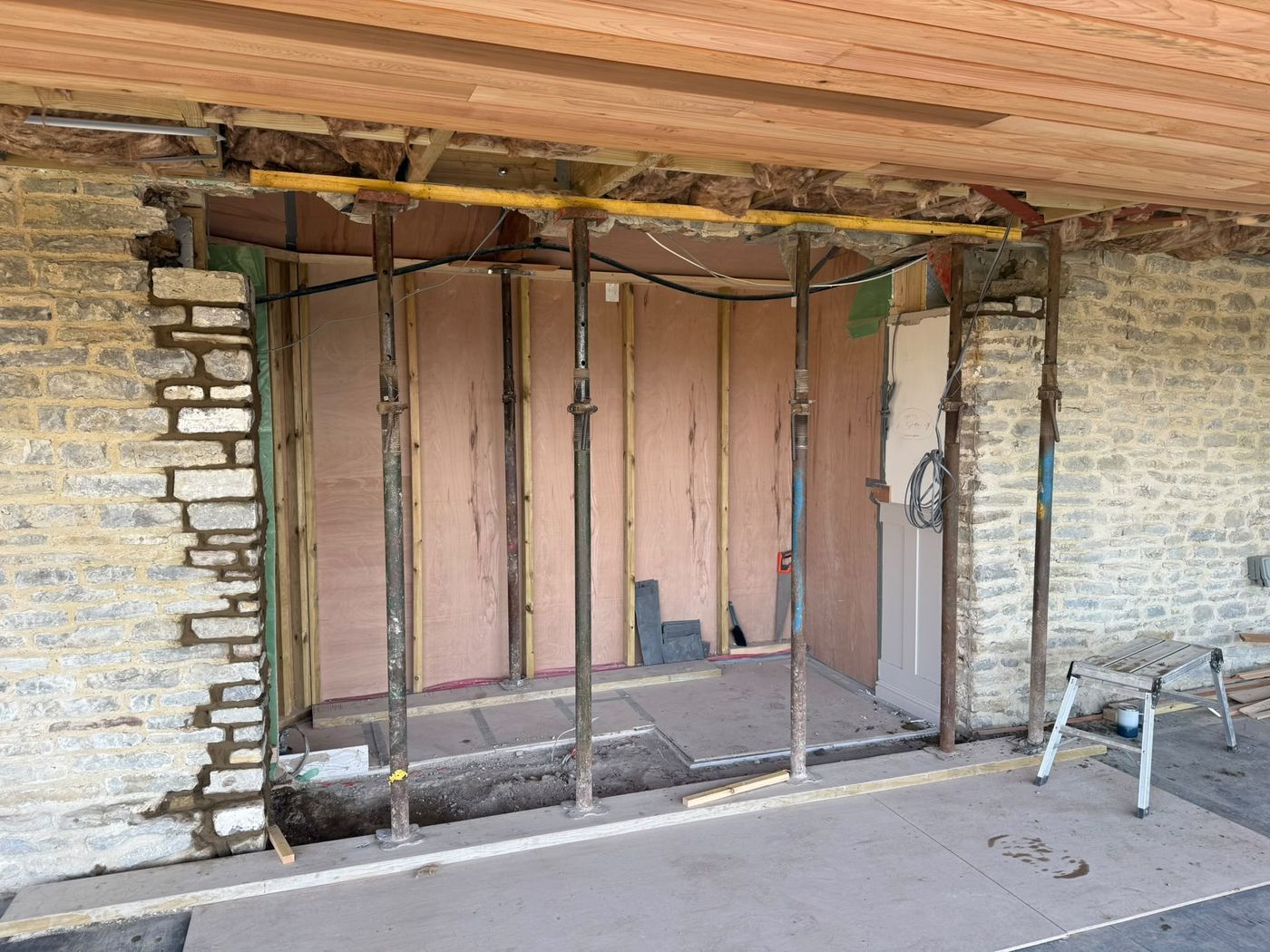
- From
- Footings
- To
- Wall plate
- Covering
- Bristol and 40 miles
Who does what
Where a bricklayer sits in the job
An extension is six trades in a queue, and each one inherits the last one's mistakes. The brickwork is the middle of it: set out off the groundworker's footings, and every window, joist and roof timber afterwards is measured off what it leaves.
- 1GroundworkerDig the footings, concrete them, bring the drains in.
- 2Bricklayer — this is himBlockwork to damp course, then the cavity wall up to the plate — lintels, cavity trays, ties and the facing skin.
- 3CarpenterWall plate, roof structure, floor joists and the first fix.
- 4RooferFelt, batten, tile or flat roof, and the leadwork.
- 5GlazierWindows and doors into the openings the brickwork left.
- 6PlastererInside, once it is watertight.
Asked often
Extensions, answered
If yours is not here, ring and ask it.
Do you do the whole extension?
He does the brick and block — footings to wall plate, including lintels, trays and the facing skin. Groundwork, roof, windows and inside work are other trades, and he will tell you plainly which is which.
Can you work to my builder's programme?
Yes. Plot and extension work is normally taken by the metre or by the job and run to the programme you are already holding.
What about building control?
An extension needs approval and inspections at set stages — footings, damp course, cavity, lintels. The brickwork is built so each inspection passes without anything being taken down.
Who sets out the openings?
He does, off your drawings. Window and door sizes, lintel bearings and cavity closers all come off the same setting out, which is why it is done once and checked before anything goes up.
The rest of the range
Everything else he lays
Ten kinds of job, three trades.
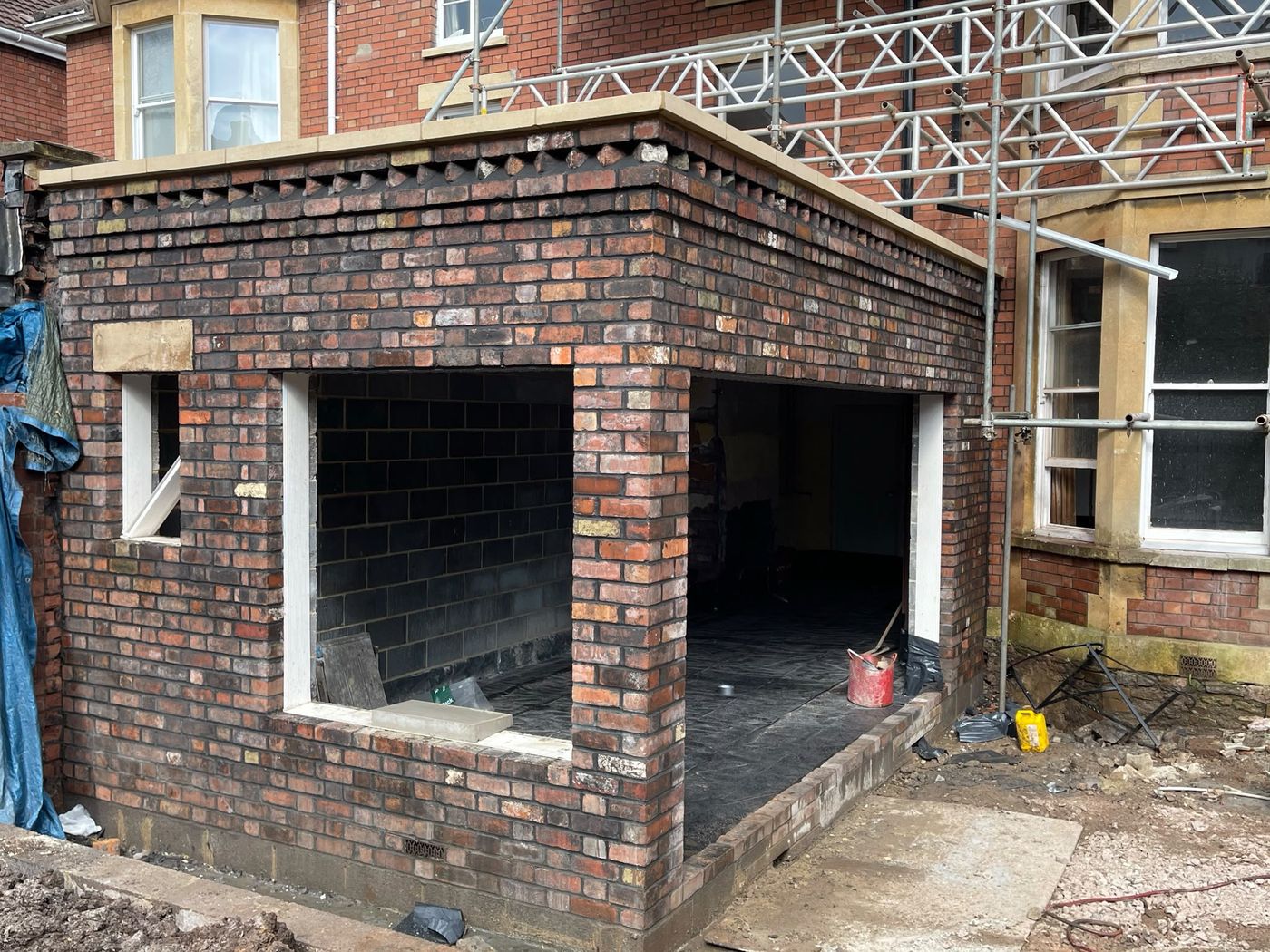 Brickwork
Walls, piers, arches and detail work in facing brick, laid to the bond the job calls for.
Facing brickPiers & archesAny bond
See the work →
Brickwork
Walls, piers, arches and detail work in facing brick, laid to the bond the job calls for.
Facing brickPiers & archesAny bond
See the work →
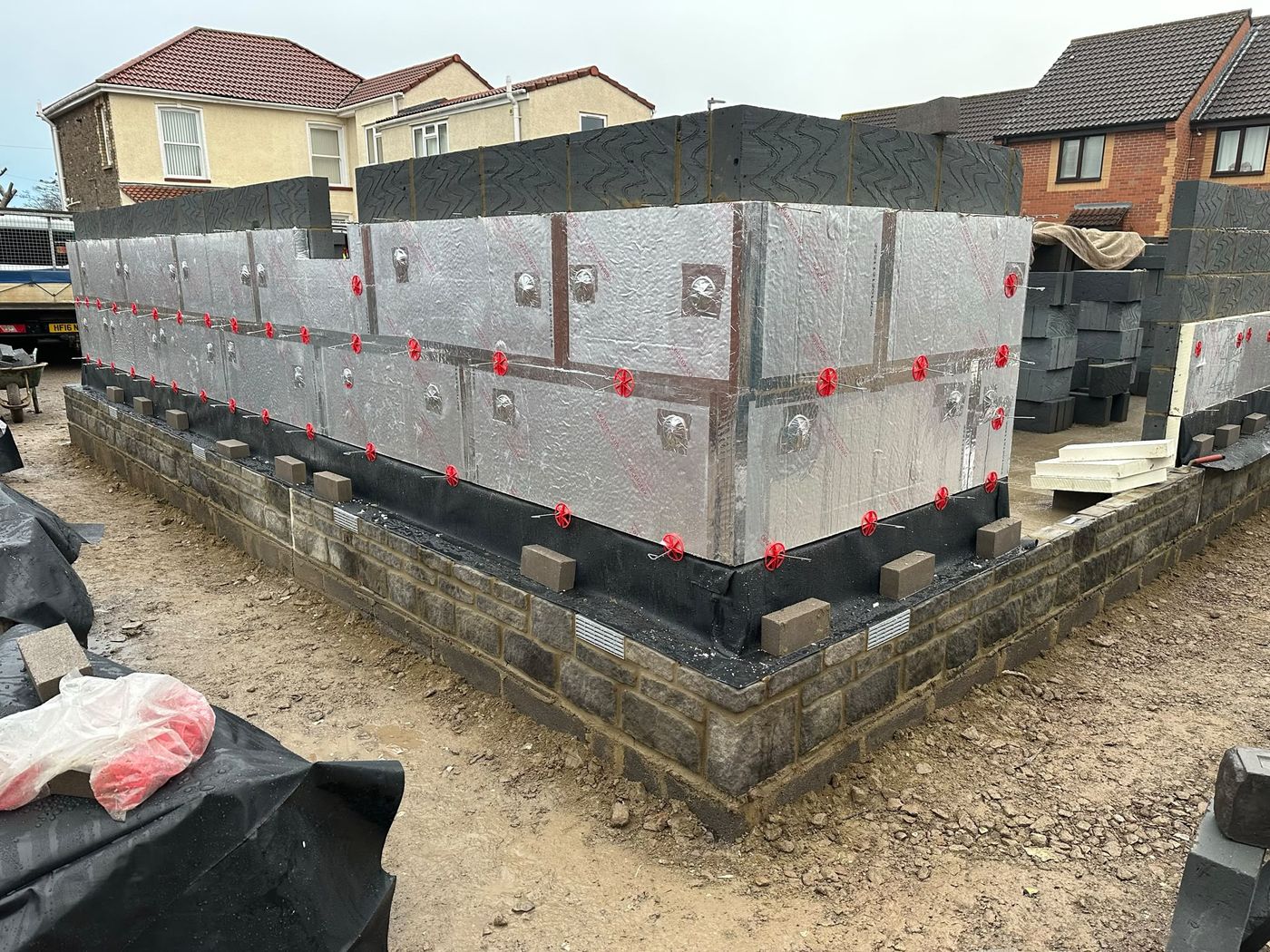 Blockwork
Inner leaves, foundations and retaining walls in dense or lightweight block, laid level and plumb.
Dense & lightweightInner leafRetaining
See the work →
Blockwork
Inner leaves, foundations and retaining walls in dense or lightweight block, laid level and plumb.
Dense & lightweightInner leafRetaining
See the work →
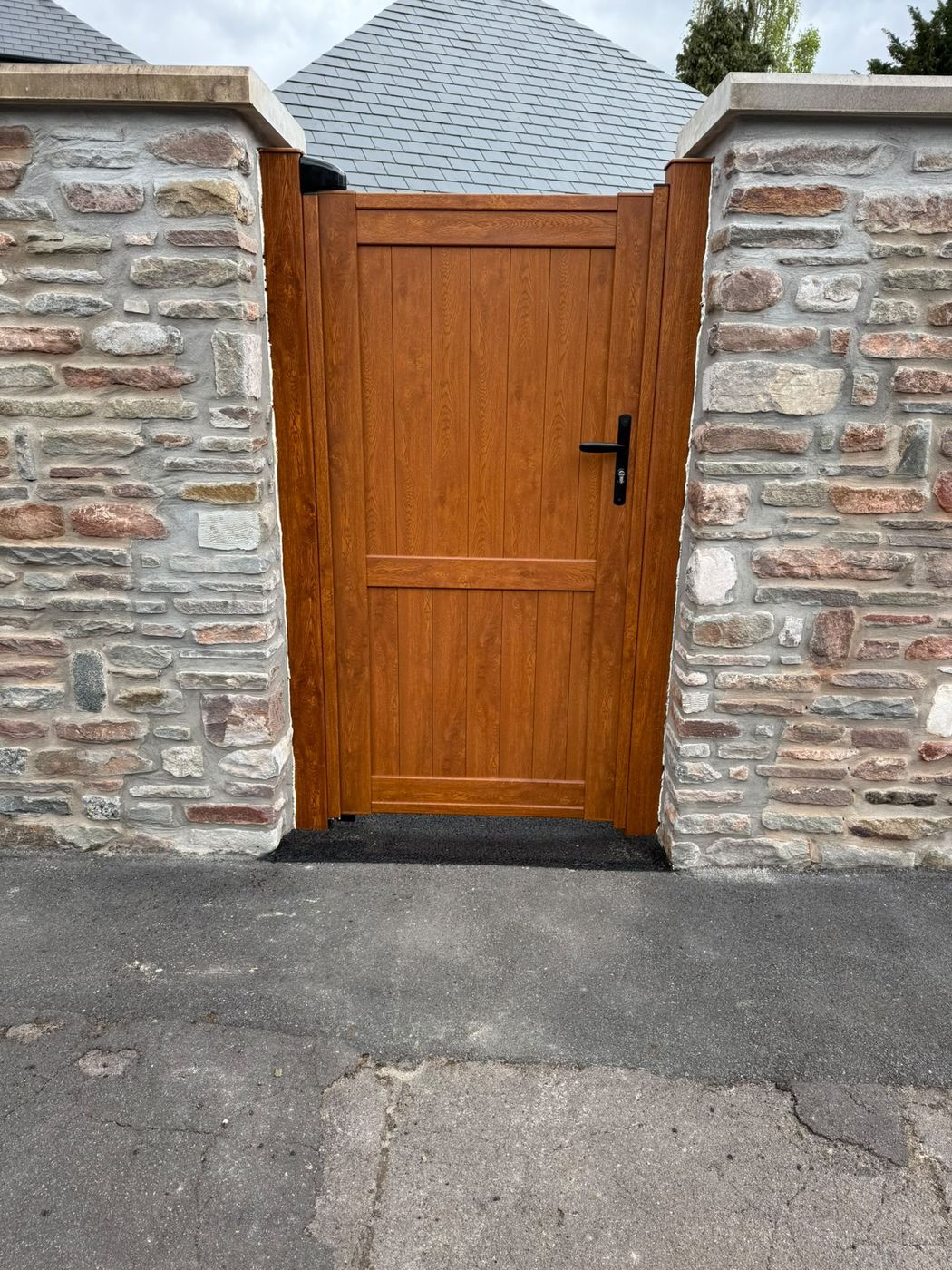 Stonework
Walling, repairs and features, coursed or random — and the masonry proper: dry stone, mullions, heads and sills.
Dry stone wallingMullions, heads & sillsLime mortar
See the work →
Stonework
Walling, repairs and features, coursed or random — and the masonry proper: dry stone, mullions, heads and sills.
Dry stone wallingMullions, heads & sillsLime mortar
See the work →
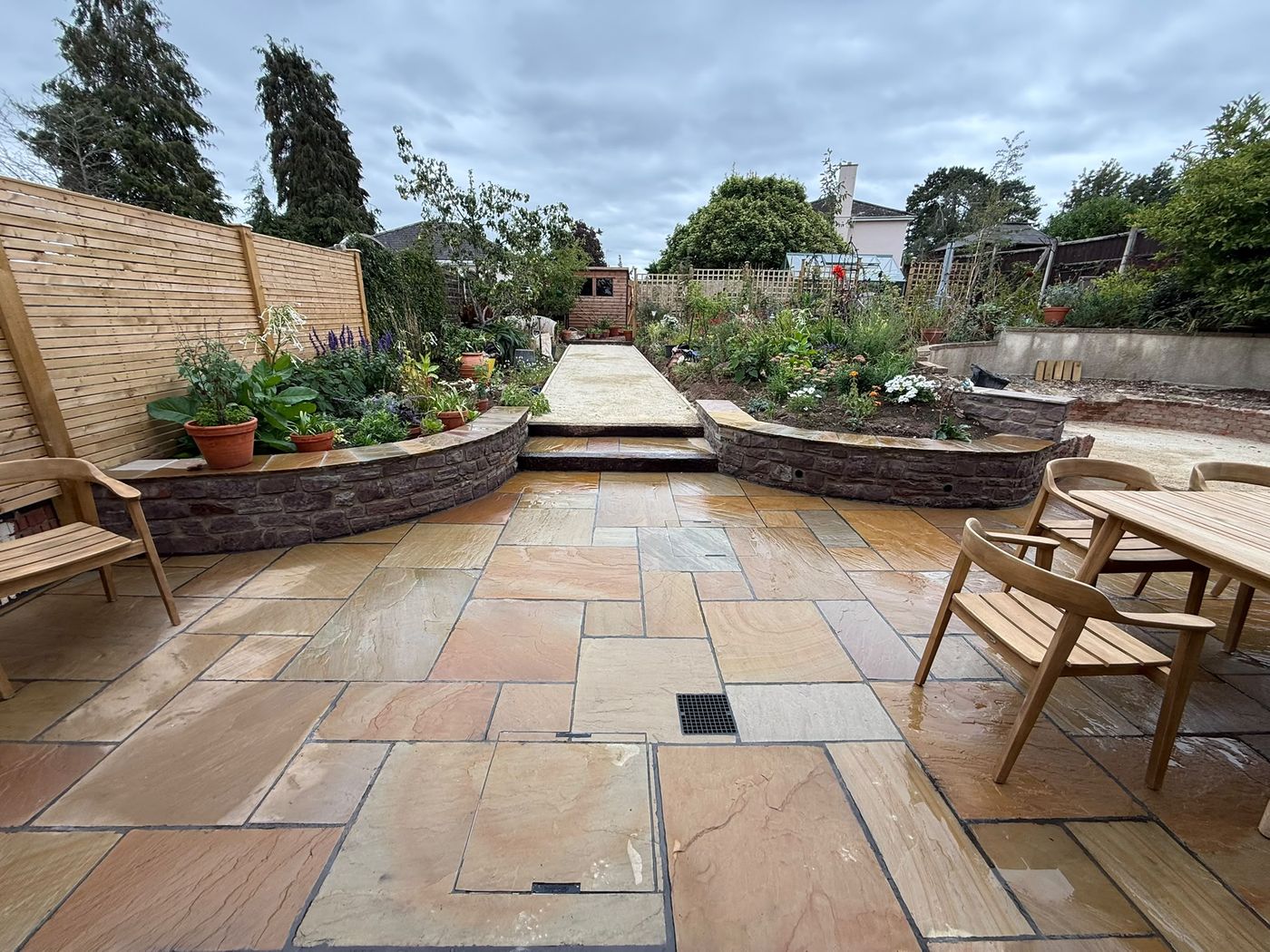 Patios & paving
Patios, paths and edging, set out square and laid to falls so the water goes where it should.
Laid to fallsEdgingPaths & steps
See the work →
Extensions
The brick and block shell of an extension, from the footings to the wall plate.
Footings to plateCavity workLintels
You are here →
Patios & paving
Patios, paths and edging, set out square and laid to falls so the water goes where it should.
Laid to fallsEdgingPaths & steps
See the work →
Extensions
The brick and block shell of an extension, from the footings to the wall plate.
Footings to plateCavity workLintels
You are here →
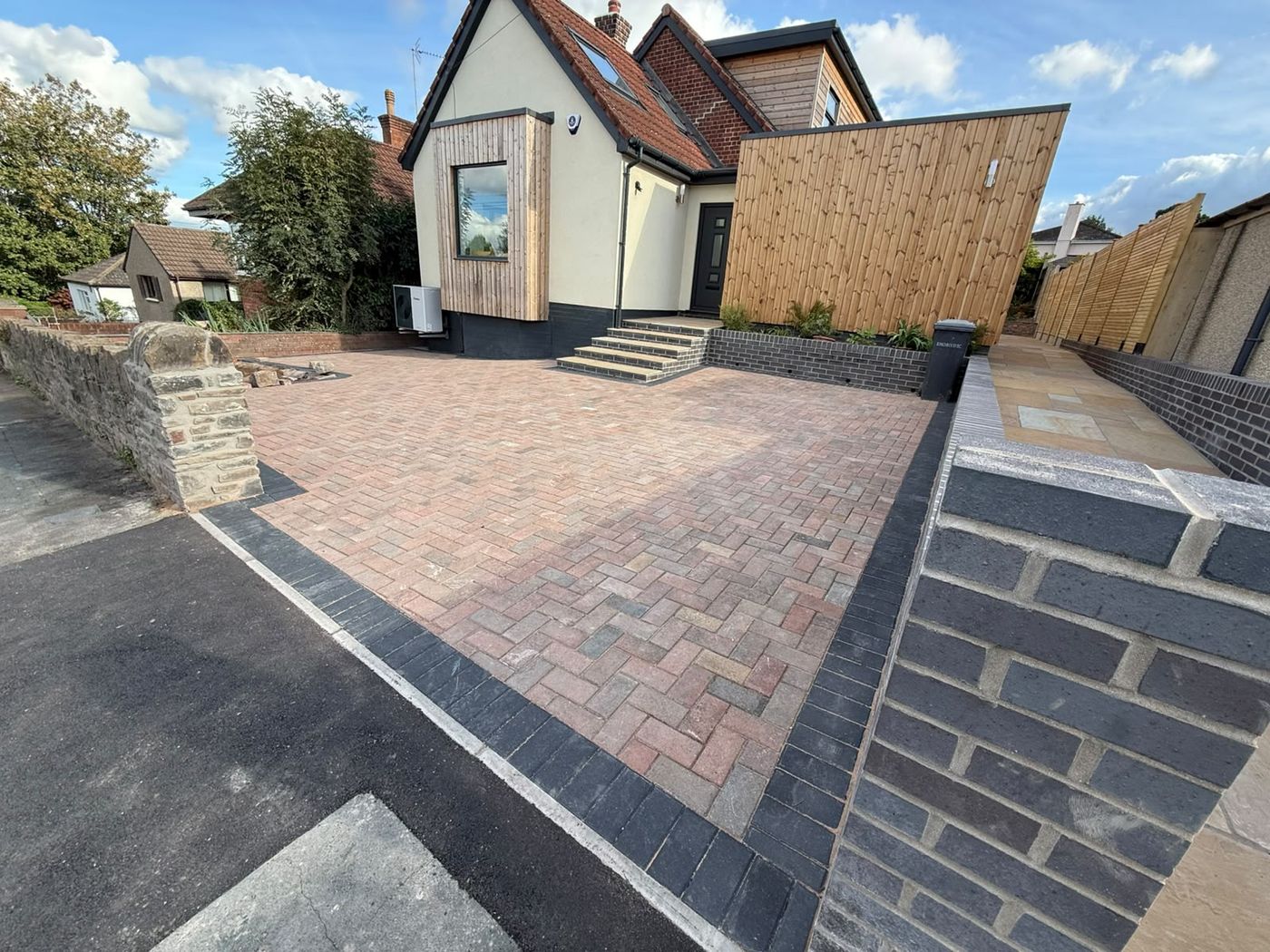 New build
Plot brickwork for builders and self-builders, by the metre or by the job.
Plot workBy the metreTo programme
See the work →
New build
Plot brickwork for builders and self-builders, by the metre or by the job.
Plot workBy the metreTo programme
See the work →
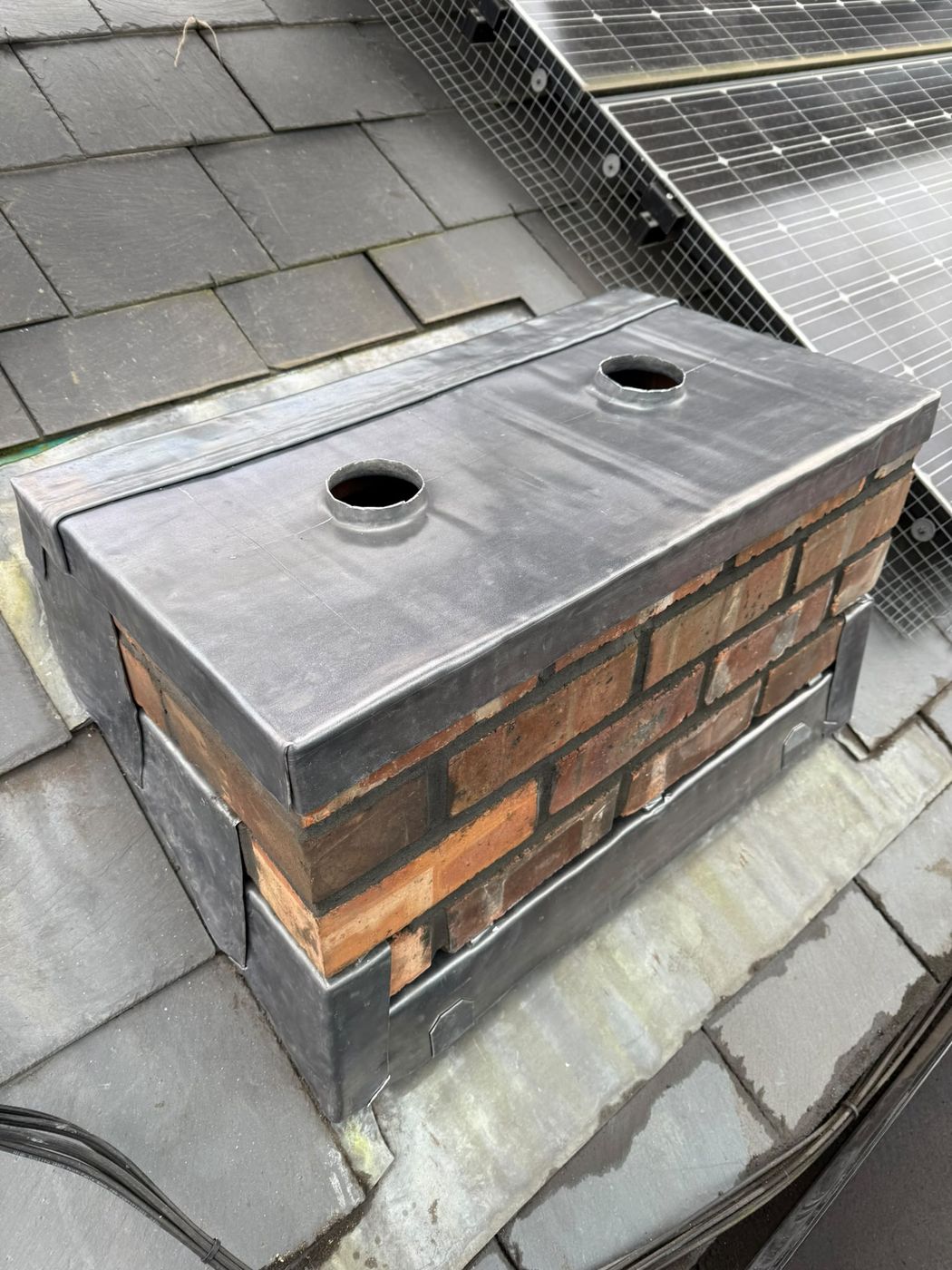 Repointing
Old joints raked out and pointed again in a mortar that suits the wall, not one that damages it.
Raked outMatched mortarLime or cement
See the work →
Repointing
Old joints raked out and pointed again in a mortar that suits the wall, not one that damages it.
Raked outMatched mortarLime or cement
See the work →
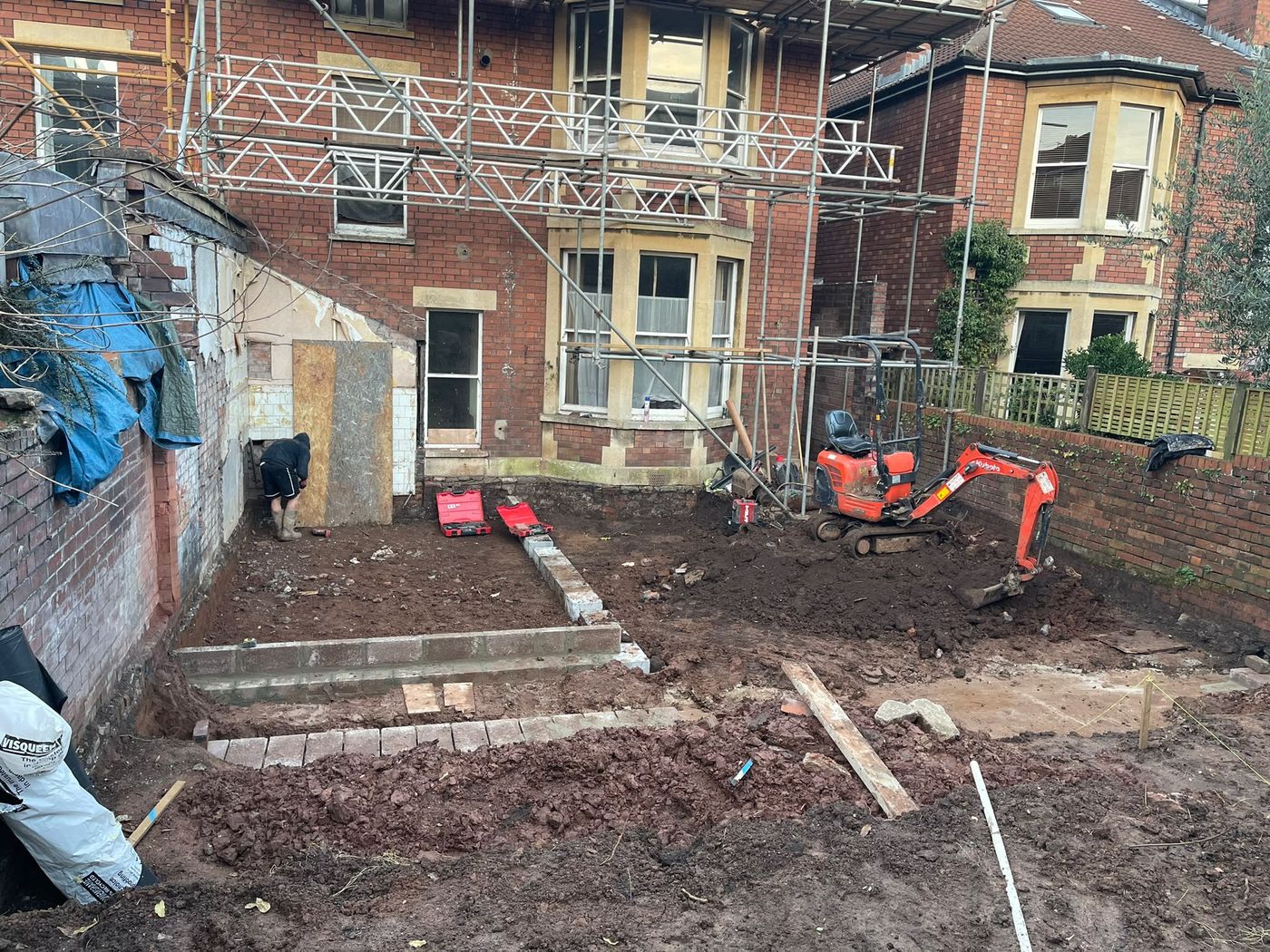 Groundworks
Digs, drainage, foundations and oversite — his own 360, telehandler and dumper, and a waste carrier licence to take it away.
360, telehandler, dumperDrainage & foundationsWaste carrier
See the work →
Groundworks
Digs, drainage, foundations and oversite — his own 360, telehandler and dumper, and a waste carrier licence to take it away.
360, telehandler, dumperDrainage & foundationsWaste carrier
See the work →
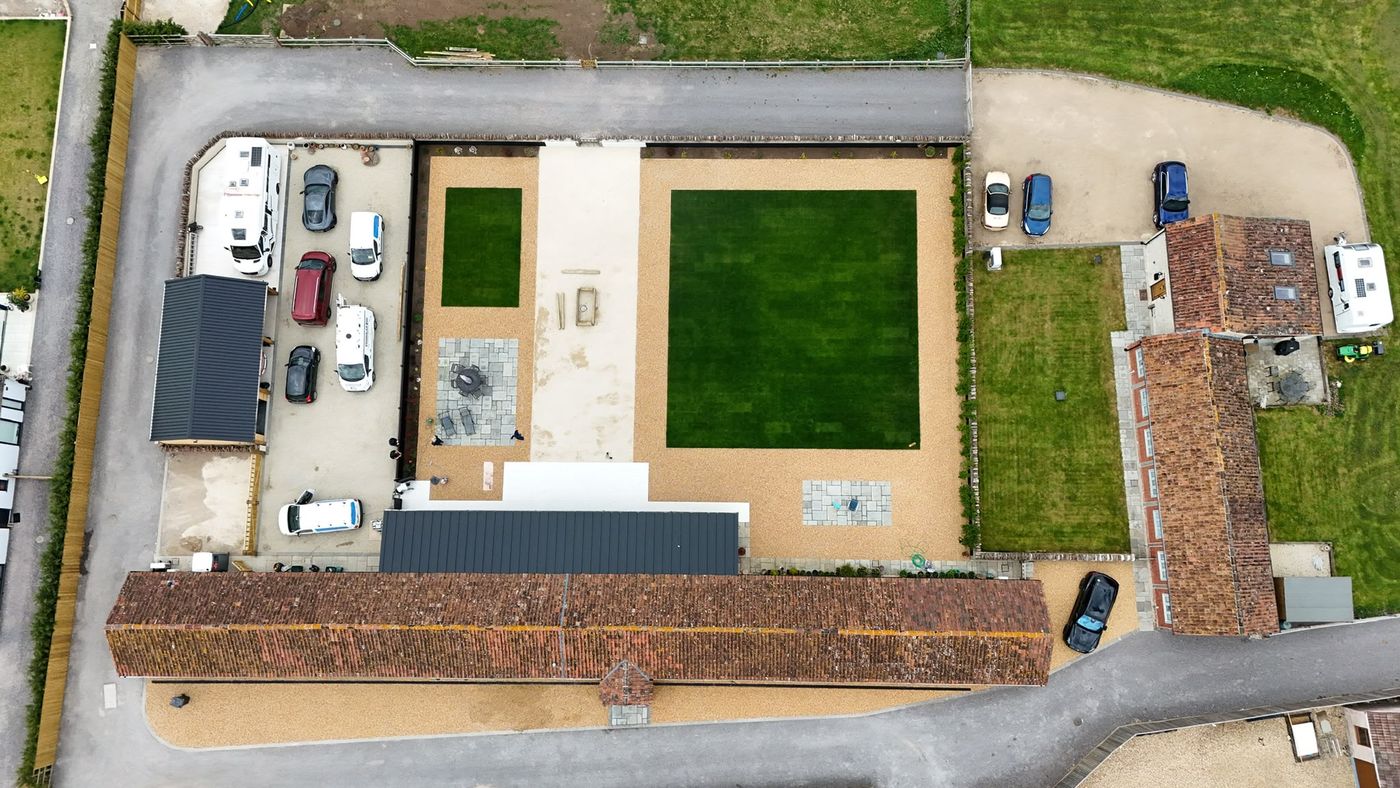 Whole projects
Derelict house to turnkey. Groundwork, shell, trades booked and run, keys handed back.
Derelict to turnkeyTrades booked and runOne person to ring
See the work →
Whole projects
Derelict house to turnkey. Groundwork, shell, trades booked and run, keys handed back.
Derelict to turnkeyTrades booked and runOne person to ring
See the work →
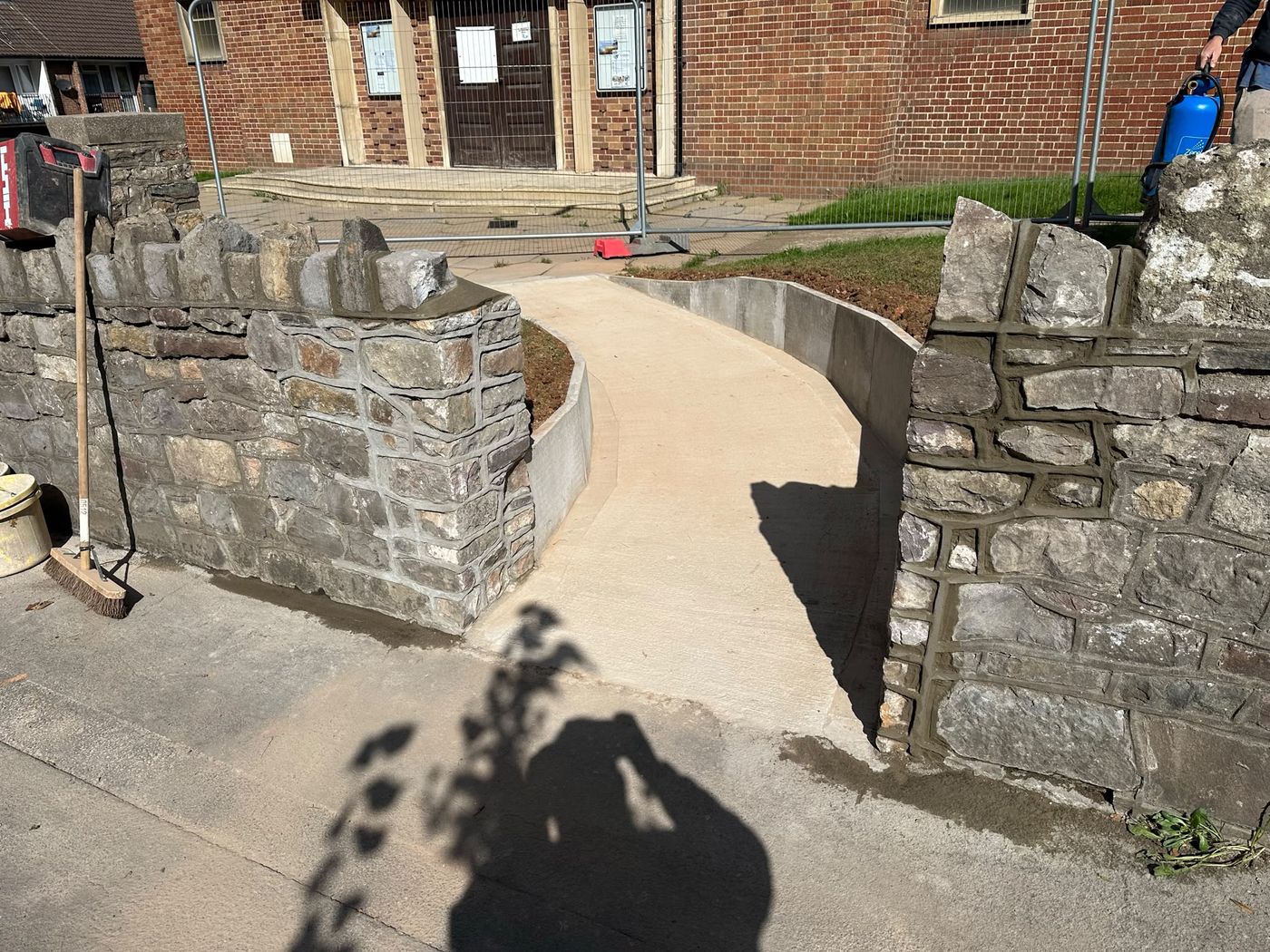 Commercial
Site brickwork for contractors and developers, priced by the metre and run to programme.
Site workPriced per m²Contractors
See the work →
Commercial
Site brickwork for contractors and developers, priced by the metre and run to programme.
Site workPriced per m²Contractors
See the work →
Get a price
Tell him what you are having done
A photograph of where it is going and a rough size is usually enough to come back with a sensible figure. He will call you.
Or call 07915 607362